Peter Hoey’s petition for the factory children
Peter Hoey came into radical politics during the agitation for the 1832 Reform Act. Born in Drogheda in 1802, but by the 1830s a prominent member of the Irish community in Barnsley, he played a prominent part in both trade union and political disputes, including the long-running campaigns for factory reform.
Arrested in August 1839 after a failed general strike for the Charter, but not tried until the following May, Hoey was sentenced to two years hard labour in Wakefield House of Correction. His health suffered badly as a result, and he was released early, in March 1841, on medical grounds. He soon rejoined the fray, however, and by April was speaking once again on political platforms.
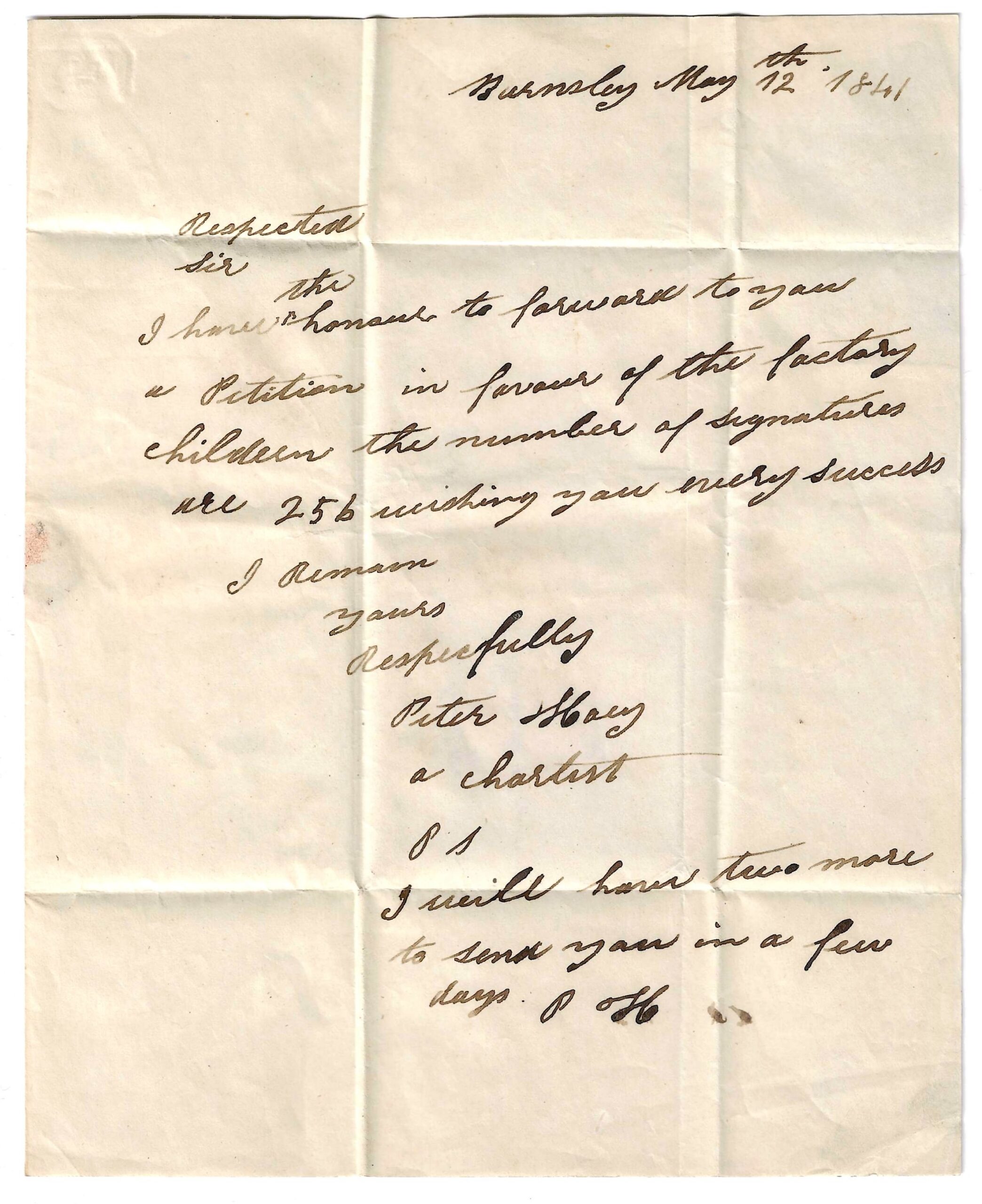
Hoey’s political interests continued to stretch wider than Chartism, and in May 1841 he wrote to the long-time factory reformer and Radical MP for Oldham John Fielden enclosing a petition of twenty-five names “in favour of the factory children”. That letter is shown here.
Factory reformers had long sought to restrict the number of hours children could work, consistently seeking a maximum ten-hour day, and to improve their working conditions. Fielden had been a supporter of Chartism in its early days, but after the rejection of the first petition and the movement’s turn to physical force, he had distanced himself from it, supporting only single issues and resisting any attempt to widen campaigns to include the Six Points.
Hoey’s letter is little more than a covering note. It reveals that a Chartist such as Hoey could see value in petitions carrying just a few names, as well as the Monster Petitions favoured by the Chartist movement. In an era before the right to vote was widespread, it was often the only means working class people had to make their voices heard – and even then it relied on finding a sympathetic MP willing to present their petition to Parliament.
The letter is also interesting in illustrating the breadth of Hoey’s political interests. By May 1841, he had returned to the campaign for the Charter, and was preparing to travel to Ireland, in part for health reasons but also to establish a branch of the Irish Universal Suffrage Association in his home town. The fight for factory reform was just one strand of his radicalism.
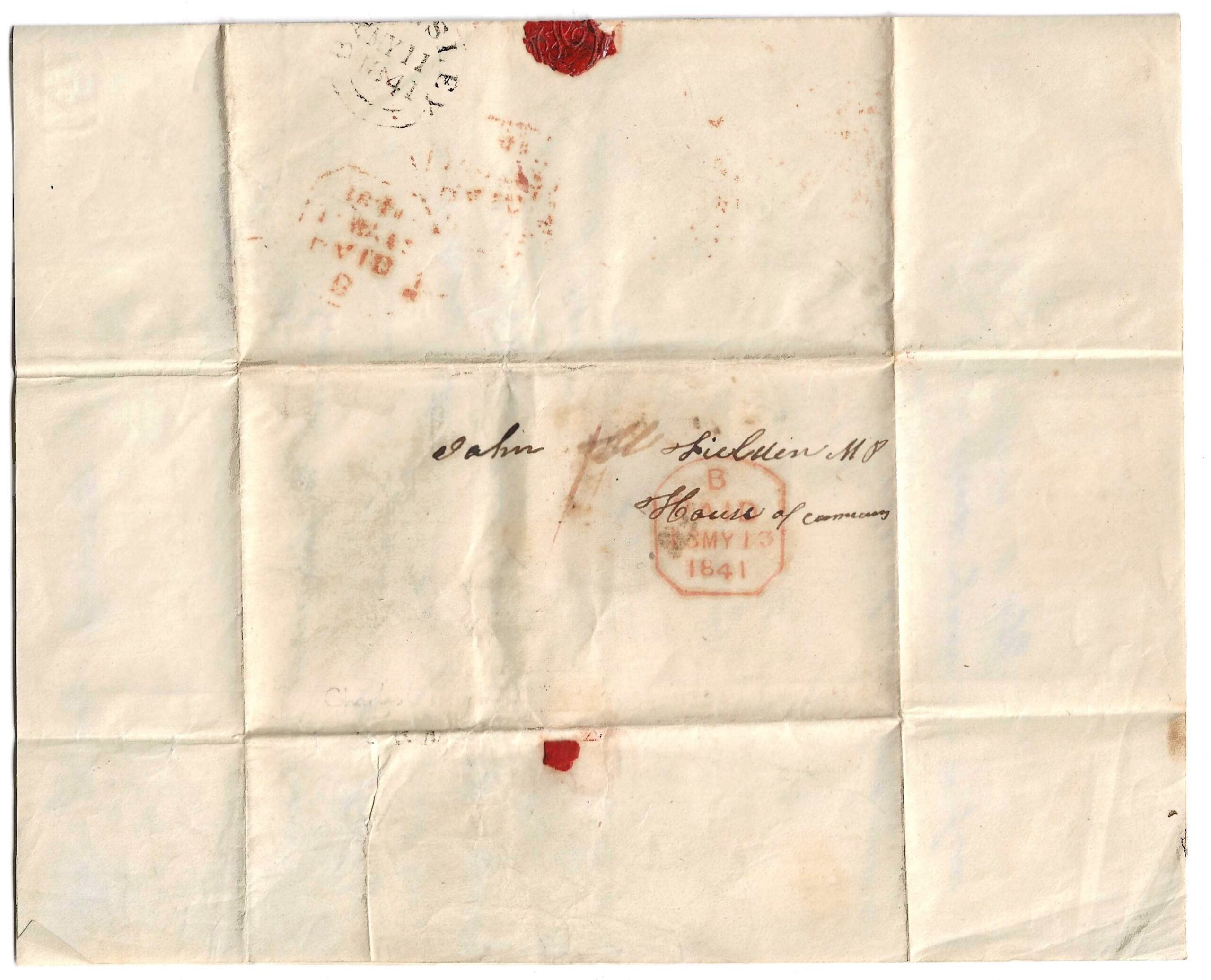
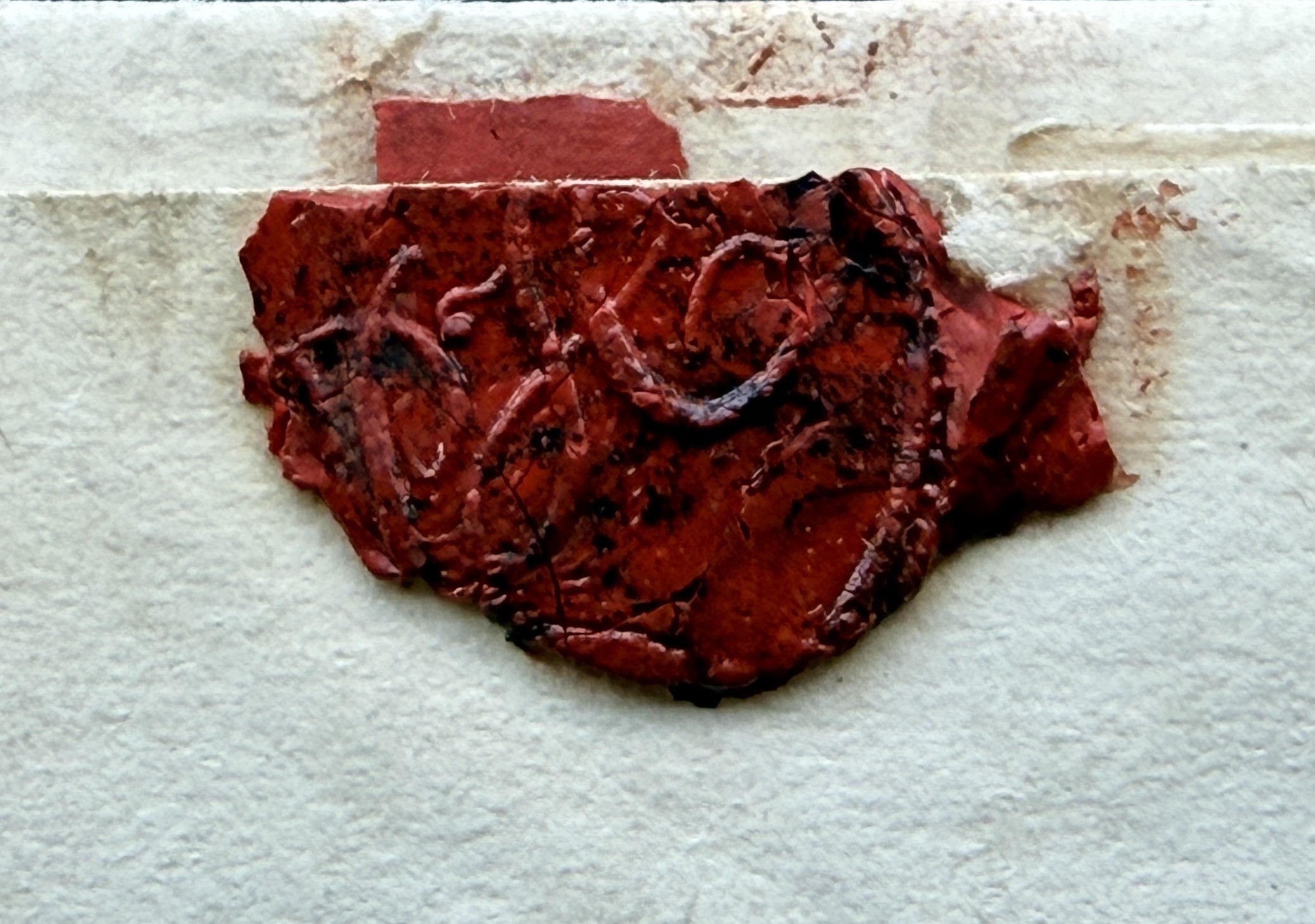
The letter is written on a single flimsy sheet of foolscap paper, and folded so that both the address and letter appear on the same side. The reverse is blank. The letter is addressed only to “John Fielden MP, House of Commons” and postmarked at Barnsley on May 13 1841. There appears to be an additional postmark of May 11, next to the remains of Hoey’s wax seal, although this would be earlier than the date of the letter itself.
The letter reads, in full:
Barnsley May 12th 1841
Respected
Sir
I have the honour to forward to you a Petition in favour of the factory children the number of signatures are 256 wishing you every success
I remain
Yours
Respectfully
Peter Hoey
A chartist
PS
I will have two more to send you in a few days PH